All Categories
Featured
Table of Contents
Effectiveness stops to be a one-time task or a buzzword; it ends up being a core cultural value that drives everyday choices. By integrating these KPIs into your routine evaluations and tactical preparation, you develop sustainable momentum that not only enhances success but likewise produces a more resilient, agile, and competitive company poised for long-lasting success.
Ready to build your operational strategy on a rock-solid structure? offers safe and secure, reliable, and high-performance cloud hosting for your essential tax, accounting, and service applications, releasing you to concentrate on optimizing the procedures that matter most. Discover how a seamless cloud environment can enhance your company's efficiency by going to Cloudvara today.
Measuring efficiency at scale needs more than output counts. When efficiency is not measured, inadequacies accumulate and performance declines.
Depending on a single metric produces blind spots. Hours worked, presence, or keystrokes do not show real productivity. Metrics must show finished work, provided worth, and kept quality. automate performance measurement throughout daily work systems, surface structural bottlenecks, and track improvement over time while safeguarding employee personal privacy. is basically the ratio of outputs to inputs just how much value your company produces for each system of resource (labor hours, capital, and so on) invested.
The Danger of Static Planning in a Multi-Cloud World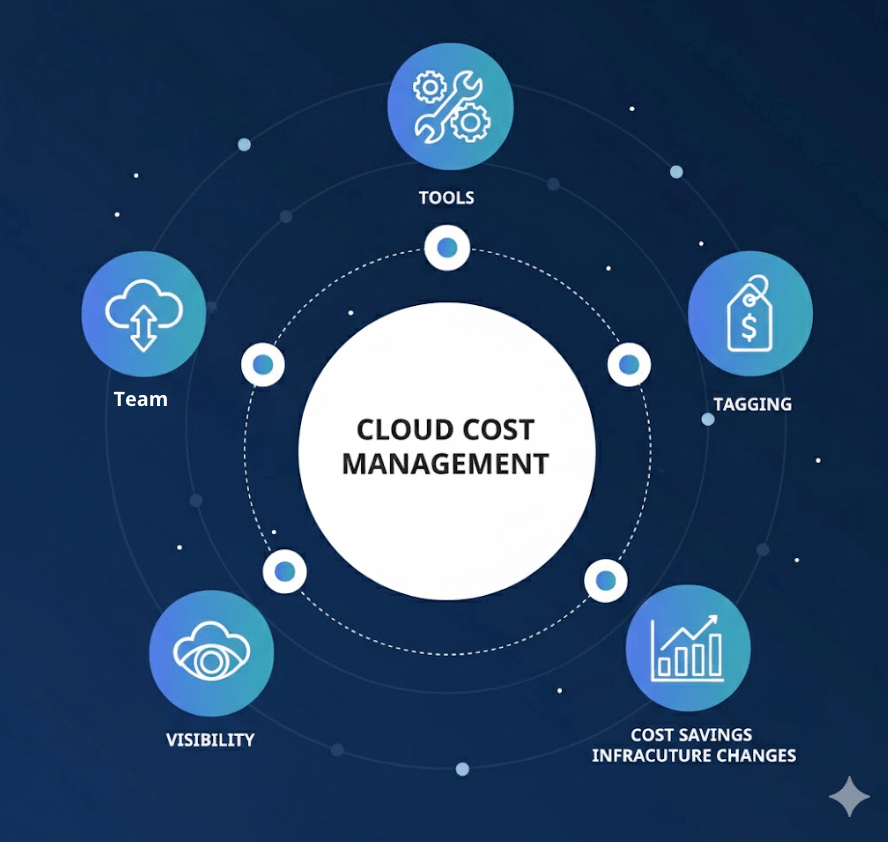
Similarly important, measuring productivity highlights where your company might be lagging. Additionally, today's work environment makes conventional efficiency hints less appropriate. Leaders can no longer count on passive face-time as a proxy for output and they shouldn't. In truth, consuming over old-school metrics like hours online has led to what Microsoft researchers dubbed "performance paranoia," where supervisors fear remote staff members are slacking, often prompting intrusive monitoring.
Boosting Cloud Asset Metrics and ROI
Instead, leading companies track a portfolio of metrics that, together, capture how well the organization is utilizing its time and resources. The precise KPIs may differ by market and business, however below are a few of the most common and helpful performance metrics: This determines how much profits the company creates per worker.
Tracking this gradually reveals whether the organization is enhancing its capability to convert people into service output. These metrics show how dependably and rapidly groups deliver work. Task conclusion rate compares planned work to finished work, while cycle time measures for how long tasks draw from start to finish. Together, they expose execution efficiency and emphasize workflow bottlenecks.
Performance must account for quality. Low error rates show effective execution and sustainable efficiency.
Performance depends on workforce accessibility. Absence rates straight decrease capacity and can suggest deeper problems such as disengagement or excessive work. Monitoring absence and turnover assists organizations address performance losses associated with labor force instability. Pick metrics that align with your business design and goals. A software application business might keep track of deployment frequency or tickets solved per engineer, whereas a manufacturing firm will focus on units produced per hour and maker downtime.
It's much better to track a couple of meaningful KPIs than to overload on lots of statistics no one can act on. While determining efficiency is important,. Here are some mistakes to prevent: Determining hours, log-ins, or visible activity confuses busyness with productivity. These inputs do not show value created and frequently motivate performative habits instead of real outcomes.
How to Control Cloud Costs in 2026
Productivity can not be recorded with one number. Every performance metric needs to clearly map to a business goal and motivate the best habits.
Productivity metrics that reward overwork or consistent availability lead to burnout and turnover. Metrics need to be translated with context and used to enhance systems, not to appoint blame. Sustainable productivity depends on maintaining worker capacity over time. By preventing these risks and utilizing performance metrics attentively, you can foster a culture of constant enhancement.
Efficiency measurement ought to have to do with, not instilling paranoia. Measuring enterprise performance requires presence into how work really takes place across groups, tools, and time. Worklytics is developed to provide that presence by translating daily work activity into objective, organization-wide productivity insights. Worklytics incorporates directly with the systems enterprises rely on to run, consisting of partnership, calendar, engineering, and task management platforms.
The platform determines indications such as focus time, meeting load, cooperation intensity, and responsiveness. These signals help organizations examine whether staff members have enough uninterrupted time to carry out core work and whether partnership is making it possible for or preventing efficiency. By examining these patterns in time, Worklytics enables companies to find patterns that straight impact business productivity, consisting of growing meeting overhead, increasing after-hours work, or decreasing execution capacity.
Why Infrastructure Metrics Remain Vital for Growth
Worklytics enables benchmarking throughout groups, departments, and period, offering a clear view of productivity circulation within the organization. Leaders can recognize which operating designs support higher output and which present friction. Test report of Worklytics in Office Analytics BenchmarksTrend analysis enables companies to track whether efficiency is improving or breaking down as the organization scales, reorganizes, or adopts new tools.
All productivity data is aggregated and anonymized, with no individual-level reporting and no access to message or file content. Just metadata is analyzed to understand work patterns at scale. Privacy design of WorklyticsThis style guarantees that efficiency measurement remains focused on systems and workflows rather than individual surveillance.
Its dashboards are developed to support decision-making by connecting productivity patterns to organizational outcomes. Leaders can examine the effect of functional modifications such as conference policy adjustments, tooling consolidation, or work rebalancing, and observe how productivity responds.
How to Scale FINOPS Without Increasing Administrative OverheadAssessing Various Asset Governance Systems
Rather of depending on instinct or anecdotal feedback, companies can utilize Worklytics information to make targeted, evidence-based modifications that enhance business performance gradually. Worklytics allows organizations to measure enterprise performance where it really lives: in how work streams across groups, tools, and time. By concentrating on execution capacity, collaboration performance, and focus conservation, the platform supplies a useful structure for improving performance at scale.
Enterprise performance determines how successfully a company converts labor and resources into service output. Organizations that actively determine efficiency consistently outshine those that do not.
No single metric is sufficient. Together, these indicators reveal whether work is effective, reliable, and sustainable. Understanding work should be measured through outcome-based indications instead of activity. Relevant metrics consist of finished deliverables, development versus objectives, quality of output, and company impact. Proxy metrics are acceptable when they plainly associate with results.

Latest Posts
Refining Resource Allocation to Reduce Excess IT Costs
How to Optimize Cloud Budgets in 2026
Is Your 2026 IT Spending Ready?